
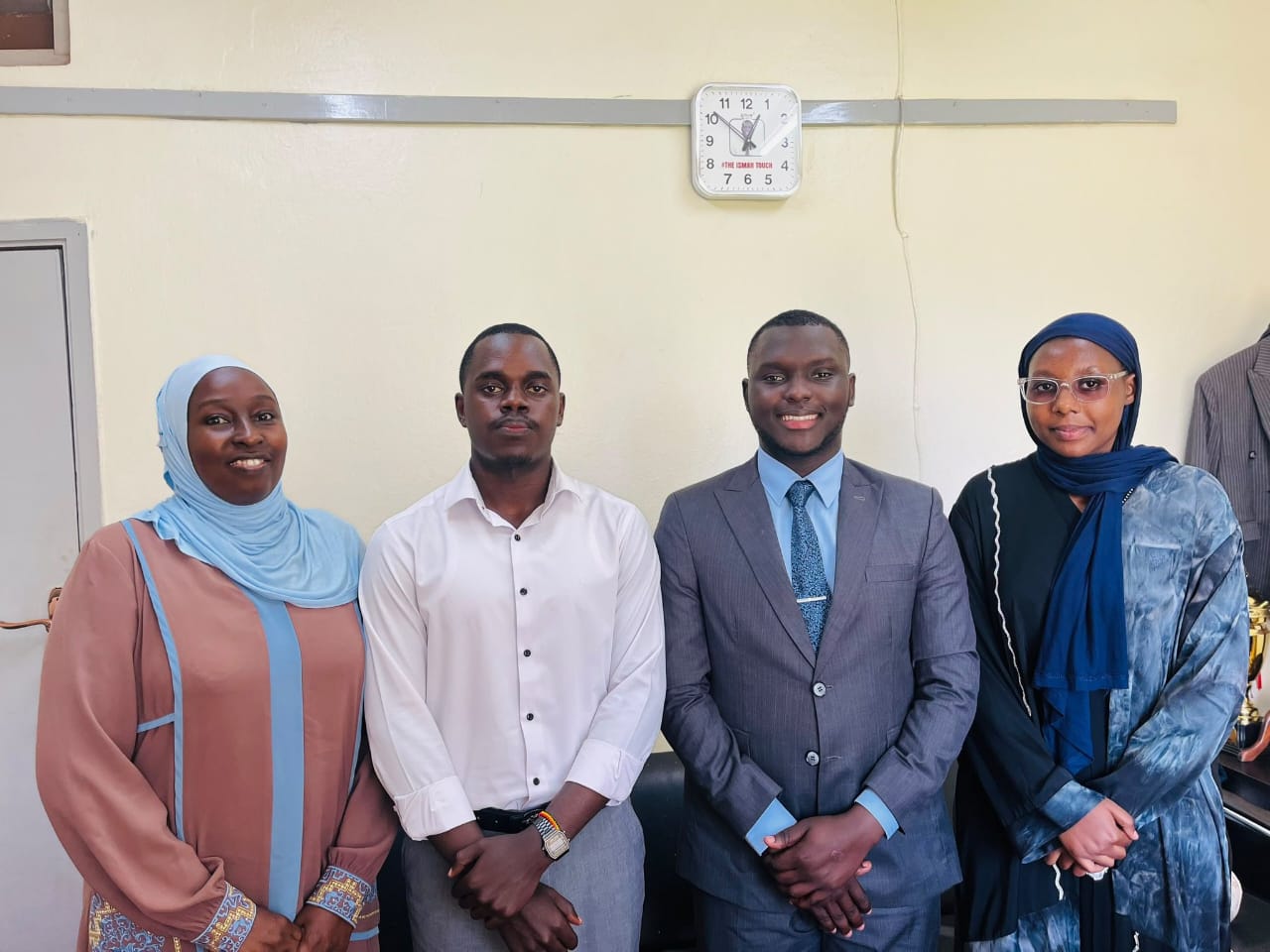
AAYC Engages MUBS Guild Leaders on Youth Partnership and Chapter
The Afro-Arab Youth Council (AAYC) has engaged Makerere University Business School (MUBS) Guild leaders on strengthening youth participation, expanding student opportunities and exploring the establishment of an AAYC chapter at the university.
The engagement, held at MUBS in Nakawa, brought together AAYC Liaison and Partnerships Manager, Ms. Halima Nansubuga, AAYC Legal Liaison and Partnerships Officer, Ms. Jackie Kiconco, and representatives of the MUBS Guild led by Guild leader Isma Walakira.
Nansubuga gave an overview of AAYC, highlighting its history, programmes and mandate of bringing young people from Africa and the Arab world together to promote youth, peace, unity and development.
She emphasised the importance of universities as strategic spaces for youth engagement and leadership development, noting that students have an important role to play in shaping the future of their communities and countries.
“Universities are an important space for youth engagement because this is where we find young people with ideas, energy and the potential to influence the future. Through our university chapters, we want to create opportunities for students to connect, participate and benefit from programmes beyond the university environment,” Nansubuga said.
She said AAYC was open to working with the MUBS Guild to identify areas of mutual interest, including youth dialogues, training, exchange programmes, scholarships and other initiatives aimed at empowering young people.
Walakira welcomed the engagement, describing AAYC as a platform that could connect MUBS students to networks and opportunities across Africa and the Arab world.
“AAYC is a big platform, and for us as young people, being connected to an organisation of this nature can open doors to opportunities, networks and experiences beyond what we are able to access individually,” Walakira said.
He emphasised the need for students to understand the practical value of participating in AAYC programmes, particularly in areas such as leadership, skills development, networking and collaboration.
“We want our students to understand what value they can gain from being part of this platform. If we can create meaningful programmes through the Guild, including dialogues, training, exchanges and other opportunities, then this can become a strong partnership that benefits our students,” he added.
Kiconco highlighted some of the opportunities available to young people through AAYC, particularly in entrepreneurship and investment.
She cited the Council’s Round Table Investment Forum as one of the platforms through which young entrepreneurs can connect with potential investors, partners and other stakeholders.
“Young people should not only look at AAYC as an organisation to belong to, but also as a platform through which they can access opportunities,” Kiconco said.
She noted that active participation in AAYC programmes could enable students to build networks and explore opportunities beyond the university environment.
The meeting also explored the possibility of establishing an AAYC chapter at MUBS, which would provide a structured platform for students to participate in the Council’s activities and programmes.
The proposed collaboration is part of AAYC’s broader efforts to strengthen partnerships with universities and student leaders across Africa and the Arab world, while creating opportunities for youth leadership, entrepreneurship, skills development, dialogue, cultural exchange and regional cooperation.
Through such engagements, AAYC seeks to connect university students with wider youth networks and initiatives in line with its vision of advancing Youth, Peace, Unity and Development.
ENDS